Chapter 5
Clans and Domains
Part 1: Patrons and Lords#
The Hand That Feeds You#
No one in Tsurugishima stands alone for long. A samurai has a lord, a monk has an abbot, a gambler has a boss, and a shrine maiden has the priest of her shrine. The person at the top of a hero's group is their patron: the one who feeds them, shelters them, and answers for them. In return, the patron expects service, loyalty, and the hero's life if it comes to that.
Chapter 4 gives the ladder a hero climbs within their group, and the favors each rung can ask. This part covers what the patron gives in return: pay, rewards, and, for the lucky and the bold, land.
Kinds of Patron#
Every group in Chapter 2 Society has a head, and that head is a patron to everyone below. What each one gives in place of pay is different.
| Patron | Who serves them | What service pays |
|---|---|---|
| A lord (daimyo or retainer with a fief) | Samurai, gentry, foot soldiers, physicians, artists, and shinobi on contract | A rice stipend or a fief |
| A court family | Court nobles, scribes, poets, and guards | A small stipend and the family's protection at court |
| A temple | Monks, nuns, warrior monks, and the temple's farmers | Food, a cell, and a share of the temple's lands for senior clergy |
| A shrine | Priests, shrine maidens, and festival workers | Food, lodging, and a share of offerings |
| A school | Students, instructors, and the master's heir | Teaching, a bed in the hall, and, for instructors, a share of fees |
| A merchant house or guild | Clerks, guards, craftsmen, and agents | Wages in coin, and a cut of a good deal |
| An underworld family | Gamblers, enforcers, and peddlers | A share of the take from the family's games, stalls, and protection |
| A shinobi league | Agents and their handlers | Payment for each contract, and the league's shelter between jobs |
A hero without a patron is free, and poor. Ronin, wandering monks, and other drifters owe no duty (Chapter 4, Duty), but they also have no one to call on for favors, no one to ransom them, and no one to avenge them.
Stipends#
A lord pays his retainers in rice, counted in koku (Chapter 2 Daily Life). A retainer's stipend (fuchi) is set by their rank and the lord's favor, and it is the measure of their standing. When two samurai meet, each one quietly wants to know the other's stipend.
| Rung | Typical stipend | Spending money each season |
|---|---|---|
| Newcomers | 3 to 10 koku (foot soldiers and pages, often paid with food and a uniform) | 30–100 mon |
| Members | 20 to 100 koku | 200–1,000 mon |
| Trusted | 100 to 500 koku | 1,000–5,000 mon |
| Seniors | 500 to 3,000 koku, usually as a fief | 5,000–30,000 mon |
| Head | The domain itself | The treasury (Part 3) |
What a stipend buys. Almost none of a stipend reaches the hero's purse. It feeds the hero's family and servants, keeps their horse and armor, pays the men they must bring to war, and covers the gifts, robes, and banquets their rank demands. What's left is the hero's spending money: 10 mon for each koku of stipend, paid each season. A Member with a 50-koku stipend gets 500 mon a season to spend as they like.
Living on the lord. As Chapter 3 says, a samurai in their lord's lands never pays for food, lodging, or a remount. The stipend is on top of that, and it is lost the moment the hero leaves the lord's service.
Other patrons. Merchant houses pay wages in coin, underworld families pay a share of the take, and temples, shrines, and schools pay in board and keep. For simplicity, a hero serving any patron gets spending money by rung as shown above, with Newcomers and Members at the low end. A temple's monks get nothing to spend at all, since they have taken a vow of poverty, though senior clergy control the temple's lands.
Changing a stipend. A lord raises a stipend as a reward (see below), and cuts it as a punishment. A cut stipend is a public disgrace: the hero loses 1 Honor, unless the lord is known to be unjust.
Rewards#
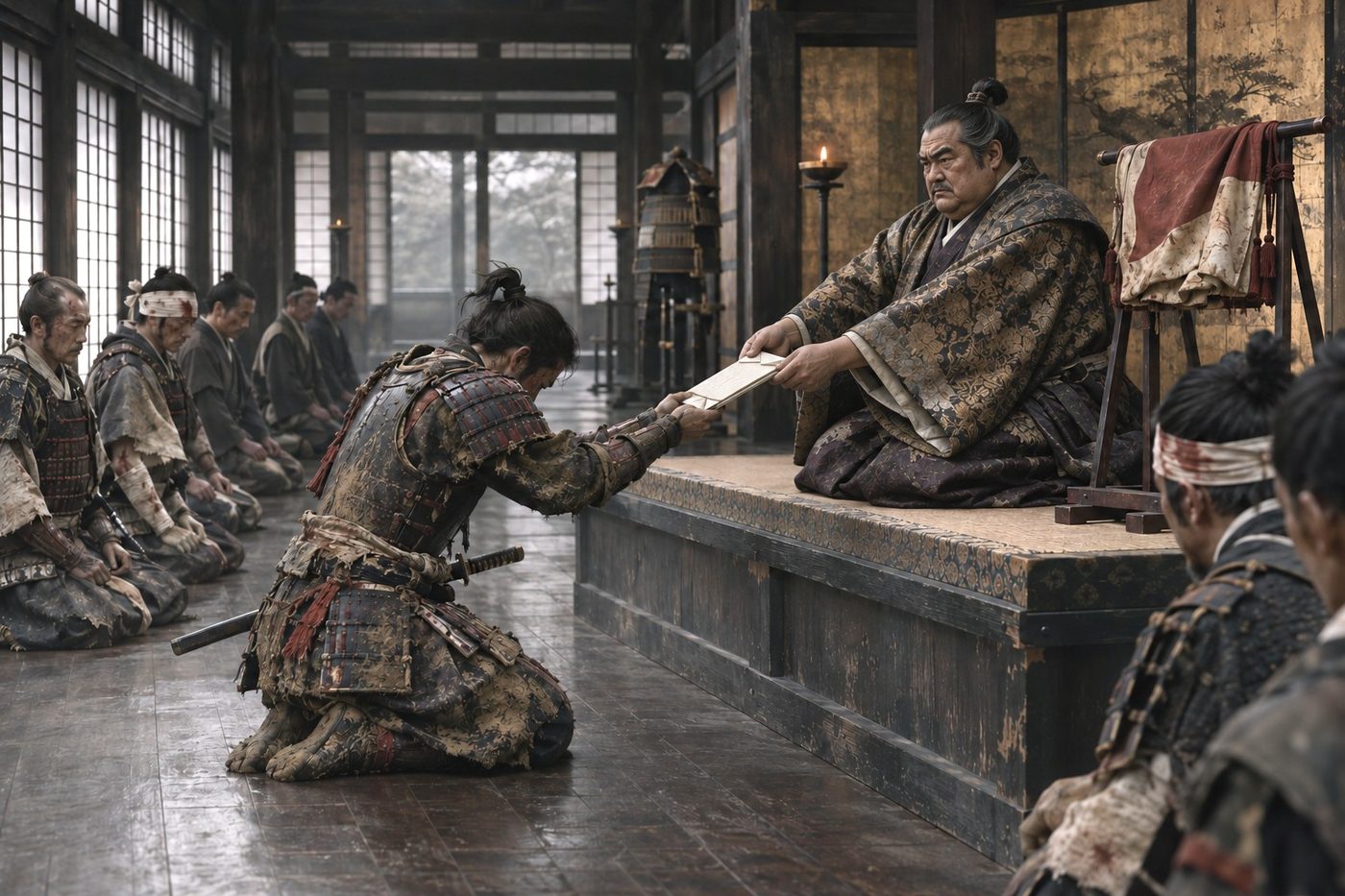
A lord who doesn't reward good service soon has no one to serve him. After a battle, a successful mission, or a great deed, the lord calls the heroes before him and gives each what they have earned. The GM chooses from the table below, scaled to the deed and to how much the lord can afford.
| Deed | Rewards |
|---|---|
| Useful service (a message carried through danger, a bandit gang broken, a guest kept safe) | Public praise, a robe or a fan bearing the lord's crest, or 200–500 mon |
| Notable service (a skirmish won, a spy unmasked, a famous enemy's head taken) | A letter of commendation (kanjō), a fine sword or horse, a raise of 10–50 koku, or 1,000–3,000 mon |
| Great service (a battle turned, a castle taken, the lord's life saved) | Promotion one rung (Chapter 4), a raise of 100 koku or more, a fief, or the lord's own surname or a character from his name |
| Service for the war tales (a province won, a rebellion crushed, the lord's house saved from ruin) | A fief of a thousand koku or more, a castle to hold, a marriage into the lord's family, or a famous heirloom blade |
Letters of commendation. A kanjō is a short letter, sealed by the lord, that names the hero's deed. It is worth more than its paper. A hero who presents one to a new lord, a magistrate, or a rival house adds +2 to one Persuasion roll there. Many families keep a box of them, passed down for generations.
Gifts are on. A gift of land or a famous sword creates a Major on (Chapter 4), on top of the hero's ordinary duty. The lord can call it in, and in the warring age, lords often do.
Rewards and commoners. A commoner who serves well may be granted the right to wear two swords and bear a surname. This is how most upstarts rise (the Upstart Hindrance, Chapter 3). A hero granted this right becomes a samurai Newcomer of the lord's clan.
Rewards denied. A lord who gives nothing for great service, or who gives the reward to someone else, earns resentment. The hero may make a remonstrance (Chapter 4, Death and Its Customs) or begin to wonder whether another lord would be more grateful. Gekokujō begins this way.
Fiefs#

A fief (chigyō) is land granted by a lord, with the villages, rice fields, and people on it. The holder collects its rice taxes, judges its quarrels, and leads its men to war. Fiefs are the dream of every retainer and the root of every war.
| Size | Yield | What it is | Who holds it |
|---|---|---|---|
| Manor | 100–1,000 koku | One to five villages, a fortified house, and a few gentry families | Trusted and Senior retainers, rural gentry, a temple's subtemple |
| Holding | 1,000–10,000 koku | A district, a small castle or hill fort, a market town, and many villages | Seniors, elders, a lord's kin, a great temple |
| Domain | 10,000 koku or more | A province or part of one, a castle town, and dozens of villages | A daimyo, a great temple, or the Shogun's house |
How the yield works. The yield is the rice the land produces in a good year. About half of it goes to taxes paid by the farmers, and the holder lives on that. The rest feeds the farmers. Part 3 turns a fief into a domain with ratings and a treasury, and every fief, from a manor up, uses those rules.
Service owed. A fief holder owes their lord soldiers in proportion to the land: about two soldiers for every 100 koku, fed and armed at the holder's own cost. A manor of 500 koku sends ten men to war, and a holding of 5,000 koku sends a hundred. Part 4 turns these men into Force Tokens.
The written oath. When a lord grants a fief, the holder signs a sworn oath (kishōmon) on paper from a great shrine, calling the kami to punish them if they break faith. Breaking it is a broken sworn oath (–3 Honor, Chapter 4) and makes the oath-breaker the target of every lord who wants their land.
Losing a fief. A lord can take a fief back for disobedience, cowardice, or a stained name (Chapter 4). A lord who takes land without cause makes every other fief holder nervous, and nervous retainers are the seed of rebellion.
Serving Well#
A patron expects more than Serve the House in Downtime (Chapter 4). Service in the isles also means:
- Answering the call to war. When the lord marches, every retainer comes, with their men. A hero who fails to come without leave deserts their lord (–3 Honor).
- Hostages. A lord may ask a retainer to send a child, a spouse, or a sibling to live at his castle as a guarantee of loyalty. Refusing is an insult, and agreeing makes the hostage's life depend on the hero's faith (the Hostage Hindrance, Chapter 3).
- Marriage. Lords arrange their retainers' marriages to bind houses together. A hero may refuse, but the lord remembers.
- Remonstrance. A good retainer tells their lord the truth, even at the cost of their life (Chapter 4). A lord who hears only flattery loses his domain.
Leaving Service#
With leave. A hero may ask to leave a patron's service, and a generous patron allows it, often with a parting gift. The hero keeps their Honor and their patron's goodwill, but loses their stipend and rung.
Without leave. A samurai who simply leaves becomes a ronin, and many clans treat it as betrayal (Chapter 2 Society). The hero loses 2 Honor, and may gain the Masterless Hindrance (Chapter 3).
When the lord falls. When a lord dies without an heir, or his house is destroyed, his retainers become ronin through no fault of their own. They lose no Honor, and many spend years seeking a new master, or vengeance.
When the throne condemns the lord. When the Emperor names a lord an enemy of the court (Chapter 8), any of his retainers may leave his service, with or without leave, and lose no Honor. Those who stay and fight for him share his disgrace in the eyes of the court.
Seeking a New Patron#
A masterless hero who wants service spends a Downtime seeking it, at a castle town, a temple, or a dice house. The hero makes a Persuasion roll, adding their Honor bonus or penalty (Chapter 4), +2 for each letter of commendation they present, and –2 if they have the Masterless Hindrance.
- Success: the patron offers a place as a Newcomer, or as a Member if someone of rank vouches for the hero.
- Raise: the patron offers a place as a Member, with a stipend at the high end of the rung.
- Failure: no offer this time.
- Critical Failure: the hero gives offense, and the patron's retainers remember their face.
Many patrons ask for a test first: a duel with one of their retainers, a dangerous errand, or a contest of refinement. This is a good place to start an adventure.
Part 2: The Heroes' House#
A Name of Your Own#
Optional. Use this part when the heroes want a home of their own. By default, the party shares one house.
Every great clan in the isles began as a handful of desperate people with a cause. A ronin band holds a ford for a grateful lord and is given the village beside it. A swordsman opens a hall in a castle town and fills it with students. A gambler wins a dice house and calls the regulars his children. A mountain ascetic builds a hut, and twenty years later it is a temple.
Heroes can do the same. When a hero founds a house, they become its head, and everyone who joins them stands on the rungs below. The house has a name, a crest, and a home. It grows when the heroes grow, and it makes enemies just as fast.
The house and the lord. A hero's personal Status stays with the group that feeds them (Chapter 4 and Part 1). A retainer who founds a house is still their lord's retainer, and the house is a branch of the lord's clan, with the lord's permission. A house can also stand alone: a ronin band, a school, or an underworld family answers to no lord, and has no one to protect it either.
Kinds of House#
The founder chooses the kind of house that fits their path. Each kind uses the matching ladder from Chapter 2 Society for its own members, with the founder as its head.
| House | Its home | Who joins it |
|---|---|---|
| Warrior house | A fortified house (yakata) with a wall, a gate, and a practice yard; later a hill fort or a castle | Retainers, foot soldiers, grooms, and servants |
| School | A practice hall (dōjō) in a castle town, with rooms for live-in students | Students, instructors, and the patrons who pay for lessons |
| Temple or shrine | A hermitage, a small temple, or a village shrine, with its own fields | Monks, nuns, priests, shrine maidens, and pilgrims |
| Underworld family | A dice house, a row of market stalls, or an inn on a post road | Gamblers, enforcers, peddlers, and debtors |
| Merchant house | A shop with a fireproof storehouse behind it | Clerks, guards, craftsmen, and porters |
| Shinobi cell | A farmhouse, a mountain village, or a shop that is more than it seems | Agents, informers, and their families |
One House or Many#
By default, the party shares one house, founded together, with the heroes as its heads. One house means one set of Upgrades and one set of Encounters, and it keeps the table's attention on the story.
Optional: a house each. Every hero walks their own path. The samurai dreams of a castle, the monk of a temple, and the gambler of a dice house of their own. A group that wants it may let each hero found their own house, so the party holds several houses at once. These rules cover both.
- One house each. A hero can head only one house at a time. They can be an honored guest, ally, or sworn friend of their companions' houses, and the houses can trade favors as allies do.
- Growing. A house gains one Upgrade each time its founder earns an Advance. A shared house gains one Upgrade each time the party earns an Advance, as in the Companion. A hero with their own house who also shares a house chooses which one grows with each Advance.
- Who benefits. Where the Companion gives a bonus to "members" (an Advantage, a Complication, or an Upgrade), a hero's own house gives it to its founder, and to companions only when they live and train there. Bonuses from different houses that raise the same Trait don't stack.
- Keeping it fun. Every house rolls its own Encounters. A party with four houses has four sets of troubles, and the GM may pick one house each session to be in the spotlight rather than resolve every house's troubles at once.
Founding a House#
A house needs four things:
- A home. A lord's grant (Part 1, Rewards), a purchase, an inheritance, a building won by force, or a ruin the heroes clear of whatever lives there.
- A name. Usually a family name, built from the Names tables (Chapter 2), or the name of the place. Schools take the founder's name or a poetic name (the Hall of the Still Pine). Underworld families take the boss's name or the name of their street.
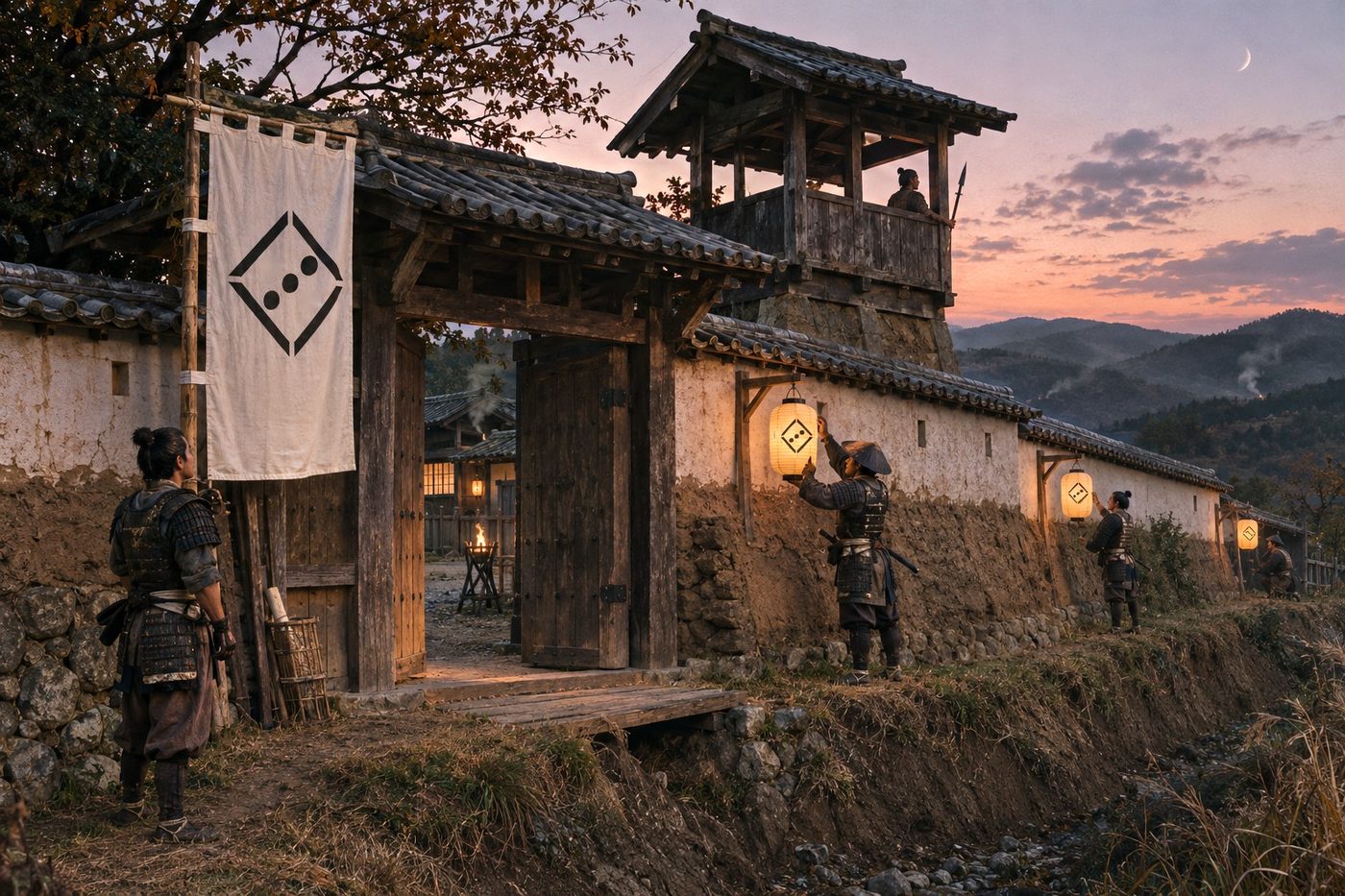
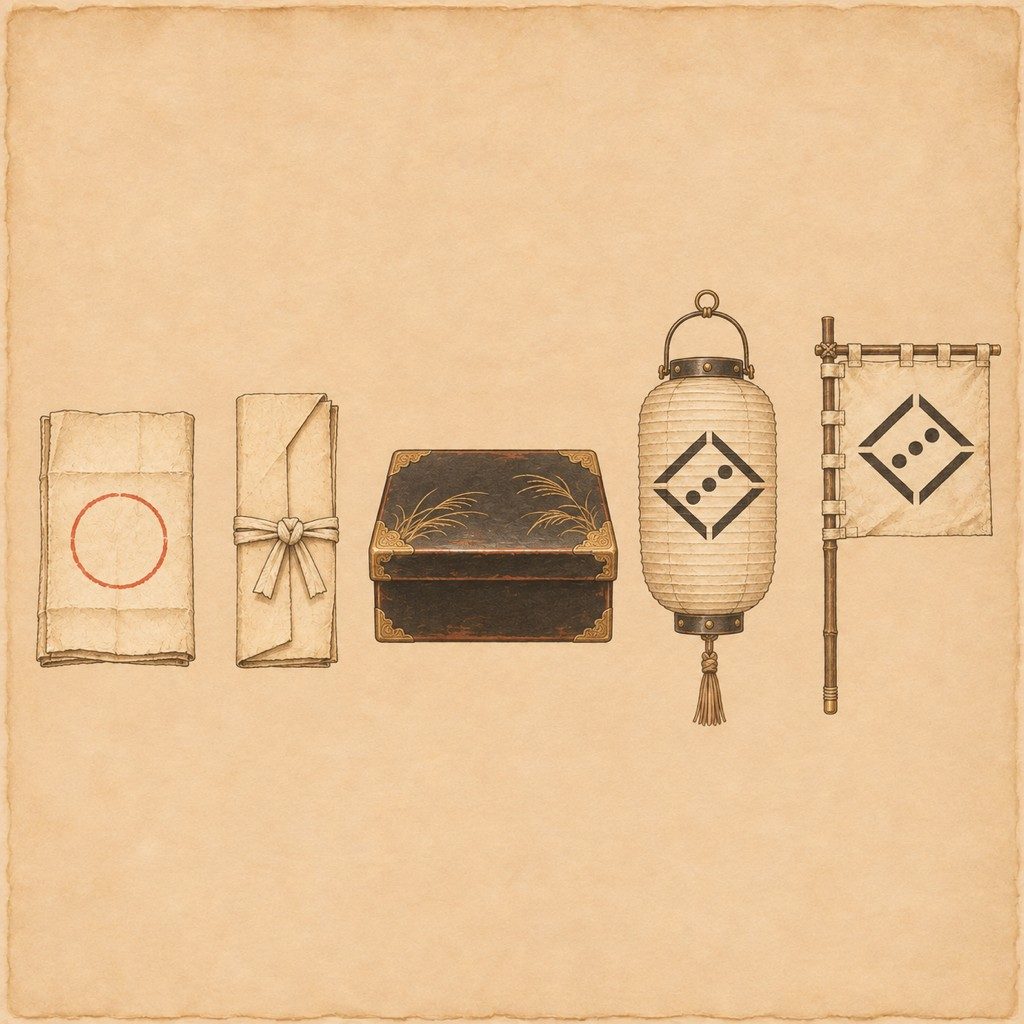
- A crest. Every house needs a crest (kamon) for its banners, lanterns, and robes. The players design it. A house that copies a great clan's crest makes a powerful enemy.
- Permission, where needed. A warrior house in a lord's lands needs the lord's leave. A temple needs its sect's license. A school needs no one's leave, but the other schools in town notice it. An underworld family needs only the nerve to hold its ground against the families already there.
Building the Home#
The home follows the four steps of the Strongholds rules (FC p. 61): roll an Advantage, roll a Complication, describe its Form and how the heroes got it, and add any Upgrades. The changes for Blade and Kami™ are below. Anything not mentioned works as written.
Advantages (FC p. 62)#
The six Advantages work as written. In the isles they look like this:
| d6 | Advantage | In the isles |
|---|---|---|
| 1 | Exotic Location | A house on a sacred island, in a river gorge, beside a hot spring, or under a waterfall |
| 2 | Hallowed | The site of a famous last stand, a saint's grave, or a kami's old shrine |
| 3 | Inspiring | A sword hung by a famous founder, a garden laid out by a master, or a gate from an old capital |
| 4 | Mentor | An old retainer, a retired swordmaster, a blind abbess, or the ghost of the house's founder |
| 5 | Productive | Rich rice land, an iron-sand river, a busy ferry, or a dice house on a pilgrim road |
| 6 | Renowned | A school's secret scrolls, a famous archery range, or a garden that poets travel to see |
Complications (FC p. 63)#
The six Complications work as written, with these notes:
- Contested: a rival house, a lord who regrets his gift, a temple that claims the land, or an underworld family that ran the street first.
- Crumbling: rotten beams, a leaking roof, termites, and a wall that slides in every typhoon.
- Foreboding: a house where a family was murdered, a hall built on a battlefield, or a home under a curse. The house is also Polluted ground: everyone who sleeps there for a week moves one step on the kegare track (Chapter 4), until a great purification lifts it.
- Well Known: a house on the post road, where every traveler, petitioner, and spy knocks at the gate.
- Intruders: sea raiders, bandits, yōkai from the old forest, or the restless dead of the battlefield next door.
- Remote: a mountain hermitage a day's climb above the last village, or an island reached only at low tide.
Form and Upkeep (FC p. 64)#
As written. A house on its own land is fed by that land (Part 3). A house with no land is fed by its trade: lessons, the take, offerings, or a lord's stipend. As the Companion says, the house's upkeep isn't counted coin by coin. It becomes a matter for play when the Encounters or the seasonal turn (Part 3) say something has gone wrong.
Upgrades#
As in the Strongholds rules (FC p. 65), a house gains Upgrades as its heads earn Advances (see One House or Many), and rolls on the Encounters table each time it does. The table below gives each Upgrade's island name. Upgrades marked as written work exactly as the Companion describes them. Changes and new Upgrades follow the table.
| Upgrade (FC) | In Blade and Kami™ | Rules |
|---|---|---|
| Alchemy Lab | Not used | |
| Duelist | Sword Master | As written |
| Dungeons | Cells | As written. A lord's cells are for prisoners awaiting the magistrate, and a cruel house earns a cruel name. |
| Great Hall | Audience Hall | As written |
| Guards | Retainers | Changed (see below) |
| Hidden Entrance | Hidden Gate | As written |
| Hospital | Physician's Hall | As written |
| Library | Scroll Archive | As written |
| Magical Workshop | Talisman Workshop | Changed (Chapter 6) |
| Master Archer | Master Archer | As written |
| Monument | Memorial Stone | As written. The fallen hero's name is carved on a stone in the garden, and their tablet stands in the house's altar. |
| Orrery | Not used | |
| Pious Priest | Resident Priest | As written. A priest or monk of the house's faith, who trains Faith. |
| Sanctuary | House Shrine or Buddha Hall | As written. Taken a second time, it becomes a public shrine or a temple; a third time, a great shrine or temple whose grounds count as Consecrated Ground (HC p. 41). |
| Self-Sufficient | Well and Storehouses | As written |
| Stable Master | Master of Horse | As written |
| Stables | Stables | As written |
| Theater | Nō Stage | As written |
| Training Grounds | Practice Yard | As written |
| Trophy Room | Hall of Deeds | As written. It holds captured banners, famous armor, and the house's letters of commendation (Part 1). |
| Vault | Fireproof Storehouse (kura) | As written, and the house's treasures survive any fire. |
| Wizard's Tower | Diviner's Hall | Changed (Chapter 6) |
| Zoo | Hawk Mews | Changed (see below) |
Changed Upgrades#
Retainers. Replaces Guards. The house gains about 50 armed retainers and two officers, with barracks to house them. As with Guards, the house may take it five times in all, and each time the company grows to twice its size, to at most 800. In a mass battle, the house's retainers join its army's count of soldiers (Part 4). A warrior house's retainers are samurai and foot soldiers. A temple's are warrior monks, a school's are senior students, and an underworld family's are enforcers and street toughs.
Hawk Mews. Replaces the Zoo. A falconer keeps the house's hawks. A hero who Trains here (FC p. 78) increases their Performance (hawking) or Survival one die type when they activate their rerolls. Lords love to be invited to hunt.
New Upgrades#
Tea Room. A small, quiet room built for the way of tea, with its own garden path. The house can host a Contest (Chapter 4, Downtime) without travel, and a hero who hosts a contest of refinement here adds +1 to their Performance rolls. A guest who drinks tea in the room and leaves on good terms owes the house nothing, but remembers it: once per adventure, the heroes add +1 to one Persuasion roll with someone they have hosted.
Purification Spring. Requires House Shrine or Buddha Hall. A spring or waterfall where the house's people stand under cold water at dawn. A hero can take the Retreat activity (Chapter 4, Downtime) at home without the 100-mon offering, and anyone who bathes here after a battle is rinsed of one step of kegare (Chapter 4). If the house is Foreboding, building the spring lifts its pollution.
Walls and Gate. The house is fortified: an earthen rampart, a ditch, a stout gate, and a watchtower. Taken a second time, the house becomes a hill fort with stone footings. Taken a third time, it becomes a castle. Each step raises the castle bonus in a siege (Part 4) and the Defense rating of the house's land (Part 3) by one die type. A warrior house in a lord's lands needs his leave for the second and third steps, since a retainer with a castle is a retainer who can say no.
Encounters (FC p. 67)#
Each time the house gains an Upgrade, the GM rolls on the Encounters table, as written. A house with its own land uses the seasonal event draw instead (Part 3), and rolls on the Encounters table only when it gains an Upgrade. In the isles, the results often look like this:
- Defend: a rival house's raid, a peasant league at the gate, or the dead of an old battle marching at the full moon.
- Revolt: students walk out, the dice house's enforcers want a bigger share, or the villages refuse the tax.
- Shortfall: a fire, a bad harvest, a lord who stops paying, or a debt called in by a merchant house.
- Plague: a fever along the post road, which some blame on an angry kami.
- Leadership: a quarrel over water rights, a murder no one will confess, or two families claiming one field. The heroes sit in judgment (Part 3, Holding Court).
- Diplomatic Mission and Marriage: the bread and butter of the warring age.
- The King is Dead!: the heroes' lord, abbot, boss, or old teacher dies, and the succession is anything but certain.
Part 3: Domains#
Land Is Life#
Optional. Use this part when the heroes hold land. By default, the party shares one domain, and plays the quick season.
A fief (Part 1) is more than an income. It is villages full of farmers who expect their lord to keep the bandits out and the river in its banks. It is shrines whose kami expect their offerings, retainers who expect their rice, and neighbors who expect weakness. A lord who rules well grows rich and strong. A lord who rules badly wakes one night to torches at the gate.
These rules turn a fief, from a manor up to a province, into a domain with four ratings and a treasury. They run alongside adventures, one season at a time, and take a few minutes at the table between sessions or at the start of one.
Who uses these rules. Any hero who holds a fief, and any house (Part 2) with land of its own. A school, a dice house, or a merchant house with no land uses the house rules alone.
The Domain Sheet#
Each domain has a name, a size, four ratings, and a treasury.
Size. The fief's yield in koku (Part 1): a manor, a holding, or a domain. Size sets how many soldiers the land owes (about two per 100 koku) and how big its troubles are. The rules below work the same at every size. A bandit gang troubles a manor, and a rebel army troubles a province.
Ratings#
Each rating is a die type, from d4 to d12, rolled like a Trait (see Rolling Ratings).
| Rating | What it measures | Rolled when |
|---|---|---|
| Harvest | Rice fields, mines, fisheries, markets, and the work of the farmers | The autumn harvest, floods, droughts, and trade |
| Defense | Walls, gates, roads, watchtowers, and trained men | Raids, sieges, and threats at the border |
| Loyalty | The goodwill of the farmers, townsfolk, gentry, and retainers | Unrest, new taxes, hard judgments, and treachery |
| Shrine Favor | The goodwill of the kami and the purity of the land's shrines and temples | Omens, curses, plagues, and spirits |
Starting Ratings#
When a hero first receives a fief, the GM picks the kind of land that fits it, or rolls a d6.
| d6 | Kind of land | Harvest | Defense | Loyalty | Shrine Favor |
|---|---|---|---|---|---|
| 1 | Border keep: a mountain fort above a pass, with poor fields and old ghosts | d4 | d8 | d6 | d4 |
| 2 | River valley: rich paddies on open ground that any raider can cross | d8 | d4 | d6 | d6 |
| 3 | Temple town: a market grown up around a great temple's gate | d6 | d4 | d4 | d8 |
| 4 | Fishing coast: villages of boats and salt pans, and sea raiders on the horizon | d6 | d6 | d6 | d4 |
| 5 | Conquered land: a fief taken from an enemy, whose people remember their old lord | d6 | d6 | d4 | d6 |
| 6 | Ordinary fief: neither blessed nor cursed | d6 | d6 | d6 | d6 |
A house's Walls and Gate Upgrade (Part 2) raises its land's Defense one die type for each step.
Gaining and Losing Ground#
Ratings change slowly. Each rating has two progress boxes.
- Gaining: a success on a Domain Action marks one box, and a raise marks both. When both boxes are marked, the rating rises one die type (to a maximum of d12) and the boxes are cleared.
- Losing: an event or a failure that costs ground erases one marked box. If there are no marked boxes to erase, the rating drops one die type.
The Treasury#
A domain's wealth is counted in stores: rice in the storehouses, coin in the strongboxes, and the credit of the domain's name. One store is a tenth of the domain's yield in koku. For a 500-koku manor, one store is 50 koku of rice, worth about 50,000 mon.
The treasury rises with the autumn harvest and falls with upkeep and Domain Actions. A hero can add their own money to it at 1,000 mon a koku, but at a lord's scale it is a drop in the bucket. A share of plunder, a ransom, or a lord's gift of gold can add whole stores, at the GM's call.
Empty storehouses. If the treasury must pay a store it doesn't have, the domain erases a Loyalty box, and its soldiers begin to drift away: the domain fields one Force Token fewer in its next battle (Part 4).
Rolling Ratings#
When a rule calls for a rating roll, the domain rolls its rating die like an Extra, with no Wild Die. Any hero who holds an office in the domain (see Offices) may make a Support roll (SWADE p. 106) with a fitting skill to help. A Benny can't be spent on a rating roll, but a hero's Support roll can be rerolled with Bennies as usual.
Offices#
A domain is run by its lord and the people the lord trusts. Each hero who serves the domain holds one office, and an office held by no hero is held by an Extra the GM names (a gray-haired elder, the village headman, the old priest), who uses a d6 in the office's skills.
| Office | Who holds it | Skills for Domain Actions |
|---|---|---|
| Lord | The fief's holder | Persuasion, Intimidation, Performance |
| Steward | The keeper of the books and storehouses | Common Knowledge, Persuasion, Academics |
| Captain | The commander of the domain's soldiers | Battle, Intimidation, Repair |
| Priest | The keeper of the domain's shrines and temples | Faith, Occult, Performance |
| Spymaster | The eyes and ears of the domain | Stealth, Thievery, Notice |
A hero holds one office at a time. A lord with no companions in office can still rule alone, but takes only one Domain Action a season.
The Seasonal Turn#
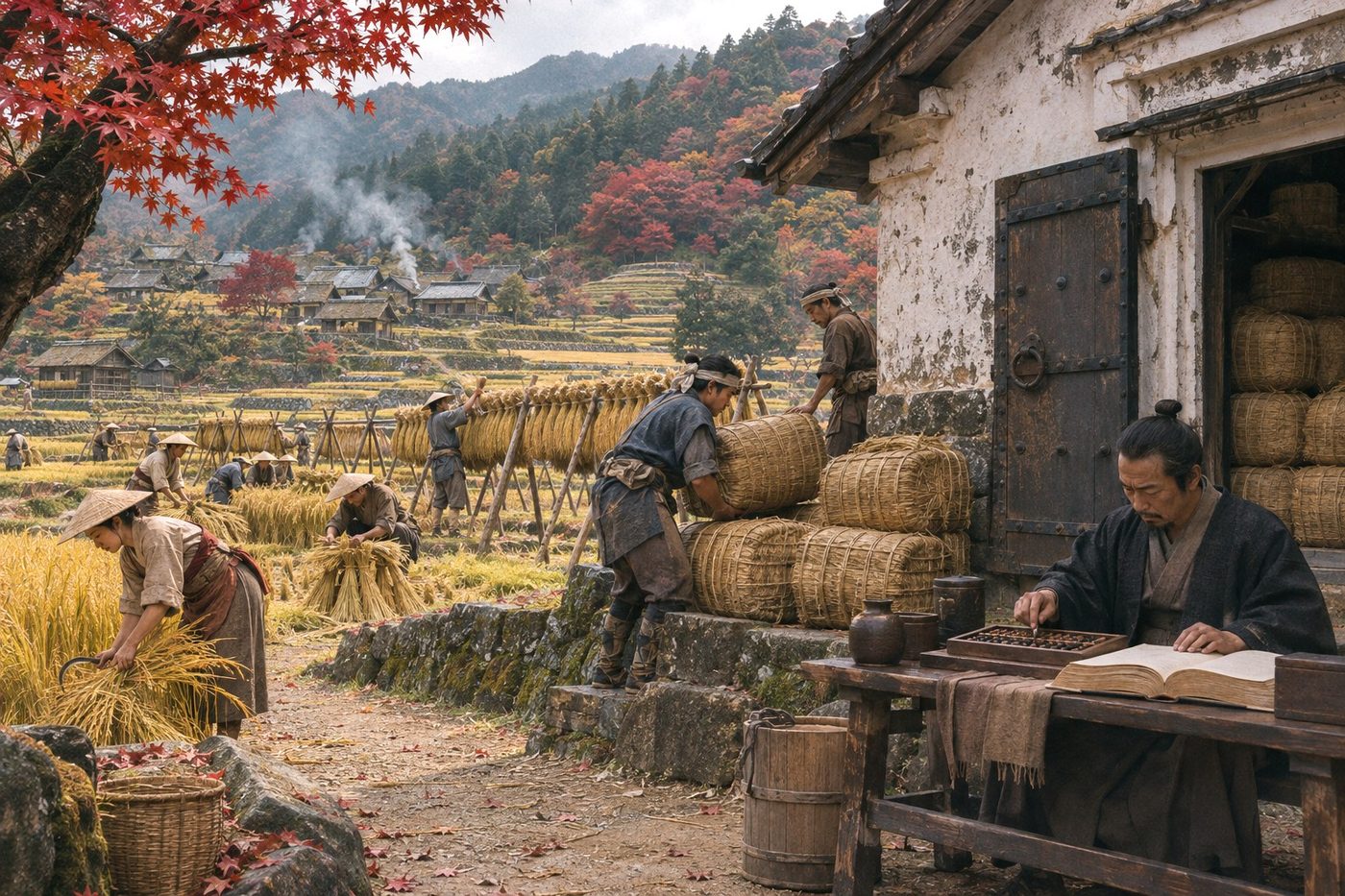
A year has four seasons, and each season is one Downtime (Chapter 4). At the start of each Downtime, play a seasonal turn for each domain in the party. There are two ways to play it.
The Quick Season (Default)#
Most groups want their land to matter without the bookkeeping. Play the quick season:
- Draw the event card and resolve it as usual (see Seasonal Events).
- Roll one rating, the one the players choose as the season's focus, with the Lord and one officer giving Support. On a success, mark a box in that rating; on a raise, mark two; on a Critical Failure, erase one.
- Pay upkeep or harvest as usual (below).
No Domain Actions are taken, and every hero with an office counts as serving the house. The quick season is a little weaker than a full turn on purpose: a lord who governs in person does better than one who doesn't.
The Full Turn#
Groups who love the domain rules play the full turn:
- Draw the season's event. Draw one card from the Action Deck (see Seasonal Events) and resolve it.
- Take Domain Actions. Each hero with an office takes one Domain Action. It counts as Serve the House for that hero's duty (Chapter 4, Duty). Heroes without an office take an ordinary Downtime activity.
- Upkeep or harvest. In spring, summer, and winter, the domain pays one store to feed and arm its people. In autumn, it makes the harvest roll instead (see below).
The harvest. In autumn, the domain rolls Harvest. Its Steward and other officers may Support.
| Result | Harvest |
|---|---|
| Critical Failure | Famine: gain one store, and erase a Loyalty box |
| Failure | A lean year: gain three stores |
| Success | A fair year: gain five stores |
| Raise | A rich year: gain seven stores |
A Shrine Favor of d10 or more adds one store to any harvest. A Shrine Favor of d4 takes one away.
Seasonal Events#
Each season opens with one card turned from the Action Deck. Its suit tells what kind of event strikes, and its value tells how it falls. The GM turns each result into a scene, a short adventure, or a single roll, as the table's time allows.
| Suit | Kind of event | Rating that shapes it |
|---|---|---|
| ♠ Spades | War and danger | Defense |
| ♥ Hearts | The people | Loyalty |
| ♦ Diamonds | Wealth and trade | Harvest |
| ♣ Clubs | Spirits and omens | Shrine Favor |
Good land, good luck. After the suit is known, look at the rating that shapes it. At d10 or more, the domain draws a second card of any suit and keeps the higher value. At d4, it draws a second card and keeps the lower one.
One extra card at most. A Clubs event can call for an extra card for more than one reason: a Shrine Favor of d10 or more or of d4, a failed Rite of the Year (Chapter 8), or the hakobore at Restless or worse (Chapter 7). The domain still draws only one extra card. If a failed rite or the hakobore applies, it keeps the lower card, whatever its Shrine Favor; otherwise Shrine Favor decides as above.
Spades: War and Danger#
- 2–5, Raid. Bandits, sea raiders, or a rival's horsemen strike a village. Roll Defense: on a failure, erase a Harvest box and a Loyalty box. The heroes may ride out to stop it instead, as an adventure.
- 6–10, Pressure at the border. A rival lord builds a fort on the border, closes a road, or demands a hostage. Answer with a Domain Action, an envoy, or force. Ignored, it costs a Defense box next season.
- J–A, Call to arms. The domain's own lord calls for soldiers. The fief sends its men (Part 1) to a battle (Part 4). Victory brings rewards (Part 1) and a share of plunder (one or two stores). Defeat costs a Defense box and the men who don't come home.
Hearts: The People#
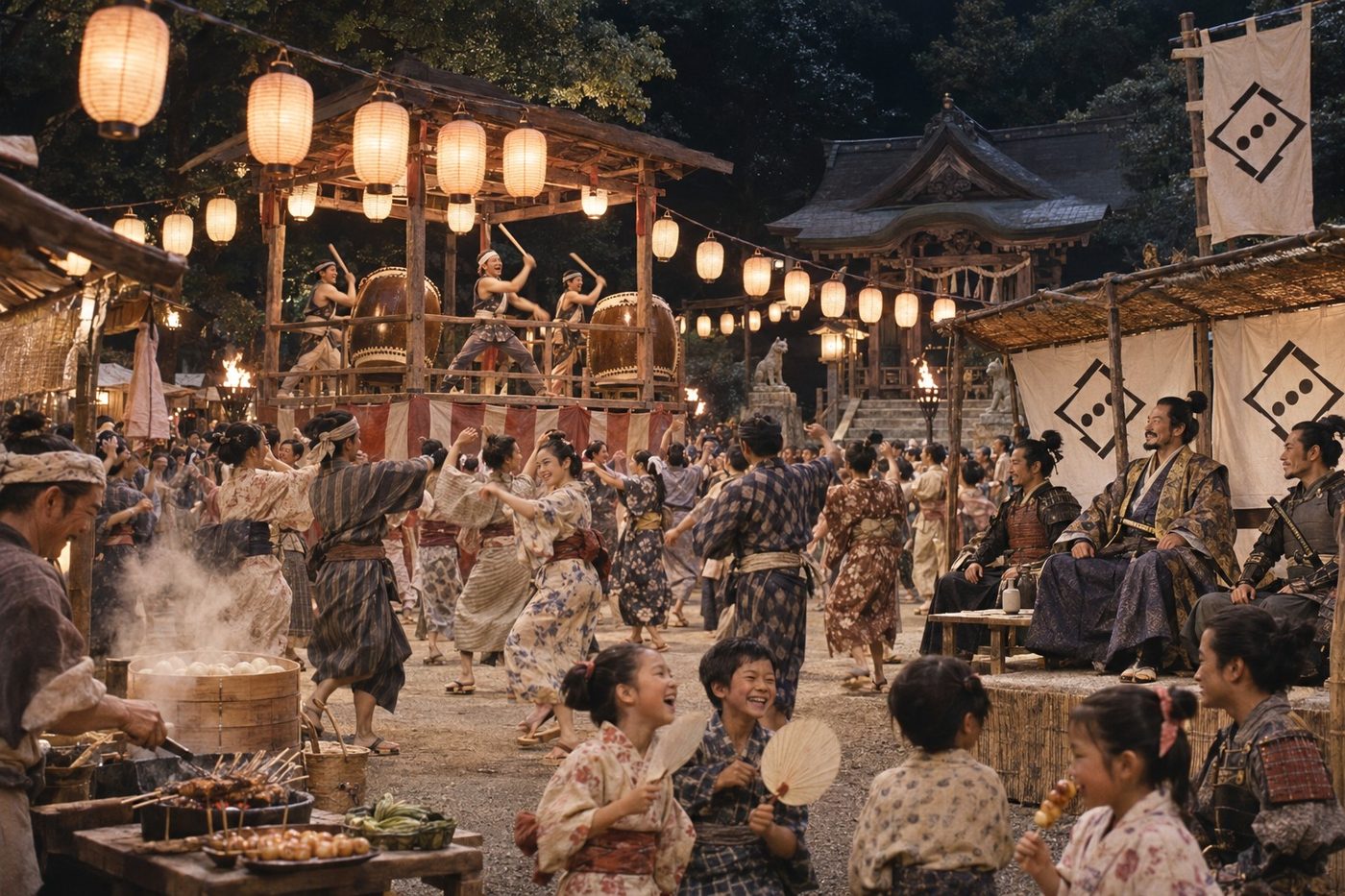
- 2–5, Unrest. A harsh official, a murder, or a rumor turns the villages sullen. Roll Loyalty: on a failure, erase a Loyalty box. On a Critical Failure, a village league takes up arms and seizes a village until the lord crushes them or talks them down.
- 6–10, Petition. Villages quarrel over water, families over a field, or a merchant accuses a samurai. The lord must Hold Court (see below) this season, as a free action.
- J–A, Goodwill. A wedding, a birth in the lord's house, or a festival the people love. Mark a Loyalty box, or gain a capable new retainer.
Diamonds: Wealth and Trade#
- 2–5, Disaster. A flood, a fire, a drought, an early frost, or a plague of locusts. Roll Harvest: on a failure, pay one store and erase a Harvest box.
- 6–10, Merchants. Traders arrive from Kanagura or Umikado. The domain can sell rice for one store's worth of rare goods (matchlocks, fine blades, or silks), or take a loan of two stores, to be repaid with one store more next year.
- J–A, Windfall. A new iron-sand stream, a good fishing season, or a rich merchant who wants the lord's protection. Gain two stores.
Clubs: Spirits and Omens#
- 2–5, Curse. A kami is angered, a shrine is polluted, the restless dead walk, or a yōkai takes up residence. Roll Shrine Favor: on a failure, erase a Shrine Favor box and a Harvest box. Ending the curse is an adventure.
- 6–10, Omen. A strange birth, a comet, or a dream shared by the whole village. The domain's Priest makes a Faith or Occult roll to read it. On a success, the GM gives a true warning about the next season's event. On a failure, the omen is misread.
- J–A, Blessing. White foxes at the shrine, a spring that heals, or a wandering saint. Mark a Shrine Favor box, and every hero in the domain is cleansed to Clean (Chapter 4).
Joker. Something remarkable happens: a famous master asks for patronage, the Shogun's envoy comes to visit, a great kami speaks, or an army marches past on its way to someone else's war. The GM decides, and every hero gets a Benny.
Domain Actions#
Each hero with an office takes one Domain Action each season. The action names the skill to roll and its cost in stores, paid before rolling. Other heroes may Support, at the cost of their own Downtime activity.
| Action | Office | Skill | Cost | Effect |
|---|---|---|---|---|
| Clear Land | Steward | Common Knowledge | 2 | Mark a Harvest box (both on a raise): new paddies, a dike, or a reopened mine. |
| Fortify | Captain | Repair or Battle | 2 | Mark a Defense box (both on a raise): a wall, a watchtower, or a cleared road. |
| Festival | Lord | Performance or Persuasion | 1 | Mark a Loyalty box (both on a raise): a feast, a dance, or remitted taxes. |
| Honor the Kami | Priest | Faith | 1 | Mark a Shrine Favor box (both on a raise): new offerings, a rebuilt shrine, or a great rite. |
| Drill the Levy | Captain | Battle or Intimidation | 2 | The domain fields one extra Force Token in its next battle this year (two on a raise). |
| Trade | Steward | Persuasion | 0 | Gain one store (two on a raise). On a Critical Failure, lose one. |
| Raise Taxes | Lord or Steward | Intimidation | 0 | Gain two stores (three on a raise), then roll Loyalty: on a failure, erase a Loyalty box. |
| Watch the Neighbors | Spymaster | Stealth or Thievery | 1 | Learn a rival's plans (+2 to the domain's Battle Plan modifier, SWADE p. 131, in the next battle against them), or erase one box from one of the rival's ratings on a raise. |
| Send an Envoy | Any | Persuasion | 1 | Seek a pact, a marriage, or an exchange of hostages with a neighbor (see Diplomacy). |
| Hold Court | Lord | Notice or Persuasion | 0 | Judge the domain's cases (see below). |
| Rest the Land | Any | None | 0 | Do nothing this season. The officer may take an ordinary Downtime activity instead, and still counts as serving the house. |
A Critical Failure on any action other than Trade also erases a box from the rating the action was meant to raise.
Holding Court#
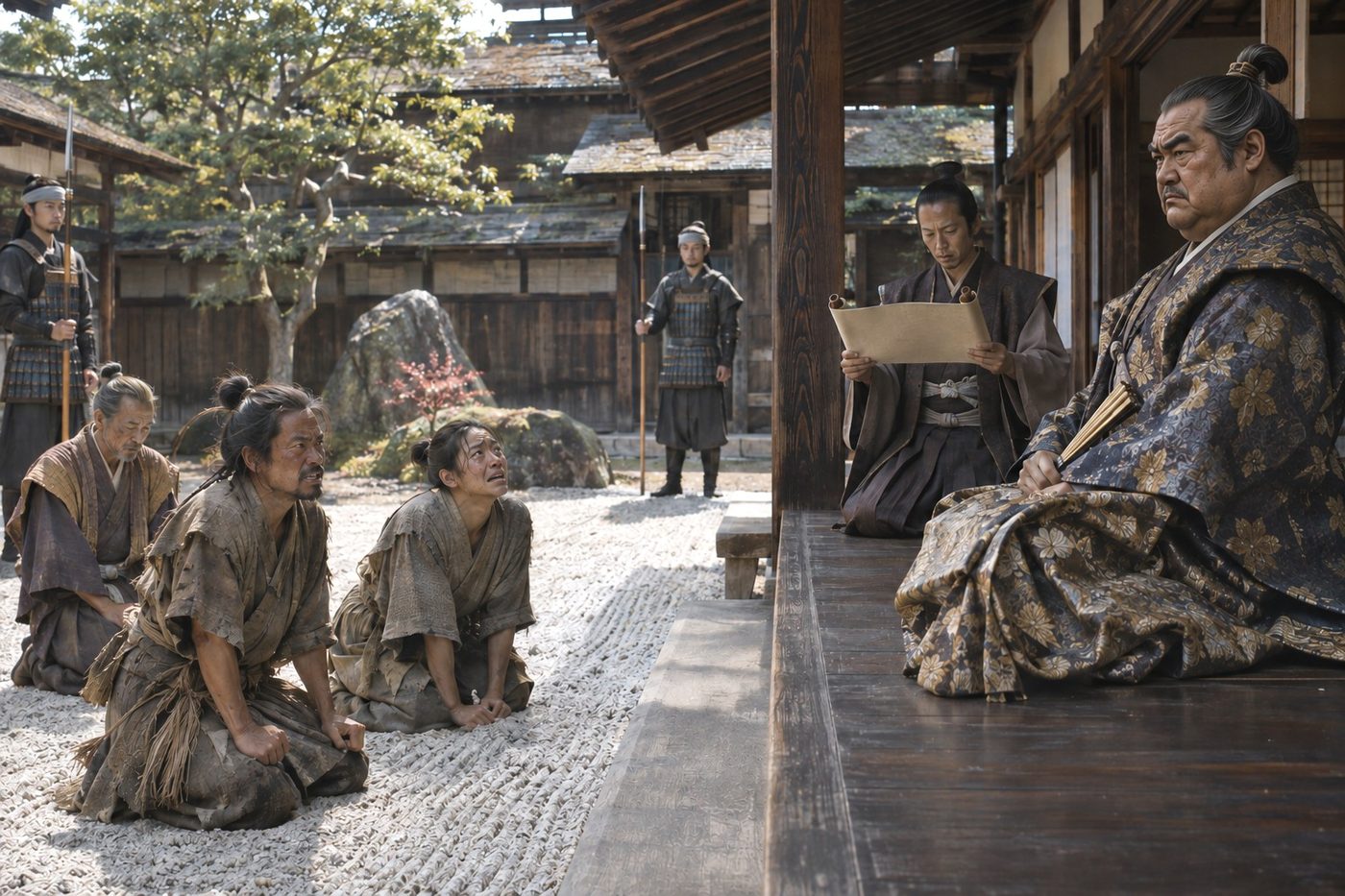
The lord of a domain is its judge. Murder, theft, quarrels over land and water, and insults between classes all come before the lord or the lord's magistrates (Chapter 2 Society). Most cases are quick: the lord listens, asks a few questions, and rules.
When the lord Holds Court, the GM sets out one case worth playing, often with a hard choice: a samurai who used the cutting right on a farmer's son, a headman who hid rice from the tax, or a widow who claims the field her late husband sold. The lord makes a Notice roll to see the truth (Persuasion to bring the parties to accept a settlement).
- Success: a just ruling. On a raise, mark a Loyalty box, and the lord's name for fairness travels.
- Failure: the ruling satisfies no one. No change.
- Critical Failure: an unjust ruling that the people won't forget. Erase a Loyalty box.
Bribes and favorites. A lord who sells a ruling, or favors their own retainer against plain justice, gains a store and loses 1 Honor if word gets out (Chapter 4). It usually does.
Diplomacy#
Domains make friends and enemies like people do. The Send an Envoy action seeks one of these, and the GM sets a penalty for a proud or hostile neighbor (–2 to –4).
- Pact: the neighbor won't attack for four seasons, and either side can call on the other for help against a third. Breaking it is a broken sworn oath (–3 Honor, Chapter 4).
- Marriage: binds the houses for good, and gives a Major on in both directions (Chapter 4). One of the heroes, or a hero's kin, must marry.
- Hostages: each side sends a child or sibling to live with the other. The pact holds as long as both hostages live (the Hostage Hindrance, Chapter 3).
Calling in on. A hero who holds a Major on over a neighboring lord can call it in for a pact without a roll, the loan of soldiers for one battle (two or three Force Tokens), or safe passage for an army.
While the Lord Is Away#
Heroes spend most of their time on the road, not in their audience halls. The domain doesn't stop while they are gone.
Seasons follow the calendar. A season is about three months. Most adventures take days or weeks, so the seasonal turn usually falls in the Downtime between them. When an adventure runs across the turn of a season, or the heroes go straight from one adventure to the next, the GM still plays the seasonal turn when the calendar turns, at the start of the next session.
Deputies. Every office has a deputy, an Extra who keeps it while its holder is away: the elder who keeps the castle, the head clerk, the sergeant of the guard, the old priest. A deputy uses a d6 in the office's skills.
Standing orders. Before leaving, each officer tells their deputy what to do. In a seasonal turn while the officer is away, the player still chooses the office's Domain Action, but the deputy rolls it, and the absent hero can't Support it or use Edges such as Steward on it. A hero who leaves no orders gets the deputy's choice, which is usually Rest the Land.
Events while away. The season's card is still drawn. The GM resolves its event with the rating roll it calls for, which the deputies may Support, and sends word to the heroes by letter or messenger. A bad event is a fine reason to cut an adventure short and ride home. Anything that needs the heroes themselves, such as a curse to lift or an uprising to face, waits until they return, and the GM may let it grow worse each season it waits.
Duty while away. A hero away on their lord's business, or their own house's business, is serving the house (Chapter 4, Duty). A hero away on private business is not.
The absent lord. A lord who stays away for long loses their people's trust. For each season after the first two in a row that the domain's Lord is away, roll Loyalty: on a failure, erase a Loyalty box. The clock resets when the Lord returns and spends at least one season at home.
When the Land Breaks#
A rating that would drop below d4 stays at d4, and the domain falls into crisis until the heroes resolve it, usually with an adventure.
| Rating | Crisis |
|---|---|
| Harvest | Famine. No harvest this year, and Loyalty rolls are at –2 until the crisis ends. |
| Defense | Open border. Every Spades event is a Raid, whatever the card's value. |
| Loyalty | Uprising. A village league, a temple's farmers, or the lord's own retainers rise. Crush them in battle (Part 4), or meet their terms. |
| Shrine Favor | Curse. A great spirit, an angry kami, or a plague of yōkai troubles the land. Every Clubs event is a Curse until it is lifted. |
A domain in two crises at once draws the lord's own lord's attention. A lord who can't keep their land may lose it (Part 1).
New Edge#
Steward Requirements: Novice, Smarts d8, Common Knowledge d6 The hero knows how to keep a storehouse full and a ledger honest. Once per season, the hero may reroll one rating roll or Domain Action for a domain where they hold an office and are present. When the hero takes the Trade action and gets a raise, the domain gains one more store.
Part 4: Mass Battles and Sieges#
The Clash of Banners#
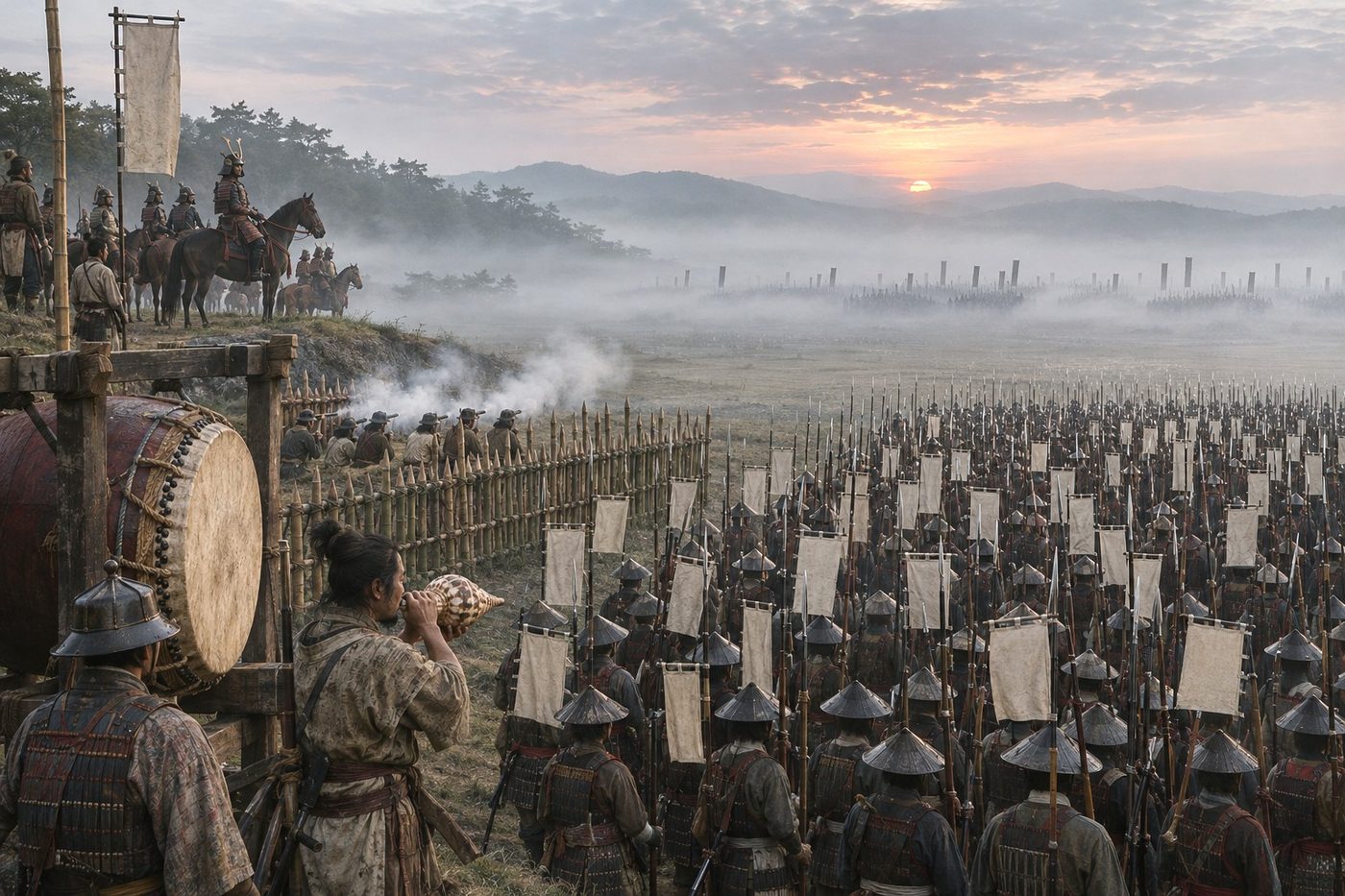
A battle in the isles begins with the boom of war drums and the bellow of conch horns. Banners rise in their hundreds, each soldier wearing a small flag on his back so his captain can find him in the dust. Archers loose whistling arrows to call the kami to witness. Then the matchlocks speak, the spear lines lower their points, and the horsemen wait for the moment when a gap opens.
Blade and Kami™ uses the Mass Battle rules (SWADE pp. 131–132) as written. This part adds what makes war in the isles its own: how a domain raises its army, the formations armies fight in, the deeds heroes do in the press, the castles that guard every province, and the long, cruel art of the siege.
Raising an Army#
Counting soldiers. A domain musters about two soldiers for every 100 koku of its yield (Part 1), plus any retainers its house keeps (Part 2), plus the extra levies of a Drill the Levy action (Part 3). A lord's allies, a pact partner, or a Major on called in can add more.
Force Tokens. Once both sides' strength is known, give the larger army 10 Force Tokens and the smaller a proportional number, as the core rules say. Adjust for quality: a company of veteran samurai counts for more than the same number of farmers with bamboo spears.
Who commands. Each army's commander rolls Battle. A hero who leads their domain's army is its commander. When heroes serve in their lord's army, the lord or one of the elders commands, and the heroes fight in the ranks (see Heroes on the Battlefield).
Paying for war. A domain whose army takes the field pays one store for each season of campaigning, on top of its upkeep (Part 3). A domain whose storehouses are empty fields one Force Token fewer.
Formations#
Each army fights in a main formation, chosen by its commander before the first round. A formation gives a Tactical Advantage (SWADE p. 131) when the ground and the enemy suit it, and a weakness the enemy can use. As the core rules say, an army's total Tactical Advantage can't be more than +4.
| Formation | Advantage | Weakness |
|---|---|---|
| Spear Wall (yari-busuma): ranks of foot soldiers with long spears, shoulder to shoulder | +2 when holding ground, or when the enemy's formation is Horse | The enemy adds +1 if its formation is Gunners |
| Gunners (teppō-tai): matchlock companies in ranks behind a bamboo palisade | +2 on open ground when the army has had a day to build its palisade | –2 in rain (Chapter 4, Combat); the enemy adds +1 if its formation is Horse and there's no palisade |
| Bow Line: archers on foot behind shields of planks, loosing volleys | +1 in the first round, and no penalty in rain | The enemy adds +1 if its formation is Horse |
| Horse (kiba-musha): mounted samurai and their followers, charging in wedges | +2 when attacking on open ground | –2 against a Spear Wall, in mountains or marshes, and against fortifications |
| Temple League (ikki): a sect's farmers, townsfolk, and warrior monks, chanting as they come | +2 to the commander's Morale rolls; +1 Battle when it has more Force Tokens than the enemy | –1 Battle in any round when it has fewer Force Tokens than the enemy |
| Skirmishers: hunters, shinobi, mountain folk, and raiders in small bands | +2 in forests, mountains, and at night | –2 in an open battle in daylight |
Changing formation. A commander can change formation between rounds with a Battle roll. On a failure, the army is caught in disorder, and the enemy adds +1 this round.
Ground and Weather#
The GM adds these to each side's Tactical Advantage (still within the +4 limit):
| Circumstance | Modifier |
|---|---|
| Holding higher ground, a ridge, or a pass | +1 or +2 |
| Defending a river crossing against an army wading across | +2 |
| Rain or snow | –2 to a Gunners army (above); bows are unaffected |
| Fog or night | +1 to Skirmishers; the attacker's Battle Plan bonus is halved |
| Surprise: an ambush, a night attack, or a betrayal mid-battle | +1 to +4, as Battle Plan |
Heroes on the Battlefield#
A hero can fight a battle at one of three levels, and heroes in the same party can fight at different levels in the same battle. The young retainer charges with the vanguard, the old ronin captains the gunners, and the lord's heir commands the whole army.
| Level | Who fights at this level | What they do each round |
|---|---|---|
| Warrior | Anyone in the army | A Support roll or a deed (see below) |
| Captain | A hero who leads a company: their own house's retainers (Part 2), a wing or the vanguard given by their lord (usually Trusted or higher), or a band of allies | Lead a Company (see below), or fight as a warrior |
| Commander | The army's general: the lord of the domain, the head of a house, or a general the lord appoints | The army's Battle and Morale rolls |
A hero can move between levels during a battle. When a captain falls, a warrior may take up their company's banner, and when a commander falls, a captain may take command of the army. Each army has one commander, and as many captains as it has companies worth naming.
The Commander#
The commander rolls the army's Battle roll each round, and its Morale roll (Spirit) when it loses Force Tokens, as the core rules say. A commander doesn't make a Support roll or a deed: their place is under the lord's great banner, watching the field. Leadership Edges (SWADE pp. 44–45), such as Command, Inspire, and Natural Leader, apply to the army's rolls at the GM's call.
The battle plan. Before the first round, the commander's player may lay out a plan, and the GM grants a Battle Plan bonus for it (SWADE p. 131). Or the commander rolls Battle: +1 on a success, and +2 on a raise.
The price of command. The commander's Honor rides on the battle. A victory earns 1 Honor (2 against a stronger army). A rout earns the commander the shame of every man who died in it (–2 Honor), and their lord's judgment (Chapter 4, Falling).
The Captain#
Each round, before the commander rolls, a captain makes one Lead a Company roll, using Battle (directing from the rear) or Fighting or Shooting (leading from the front).
- Success: the commander adds +1 to their Battle roll. A captain who led from the front takes Fatigue from Bumps and Bruises (SWADE p. 125), as in the core rules.
- Raise: the commander adds +2, and the captain gives their company one order this round:
- Hold Fast: the army adds +1 to its next Morale roll.
- Strike the Flank: the enemy subtracts 1 from its next Battle total.
- Close Ranks: the next time the army would lose two Force Tokens, it loses one instead.
- Failure: the company falters and adds nothing. A captain who led from the front takes a Wound.
- Critical Failure: the company breaks or is cut off, and the army loses one Force Token at once. The captain takes d4+1 Wounds if they led from the front.
A captain's company is part of the army's Force Tokens, not added to them. A captain whose company is destroyed fights on as a warrior.
The Warrior#
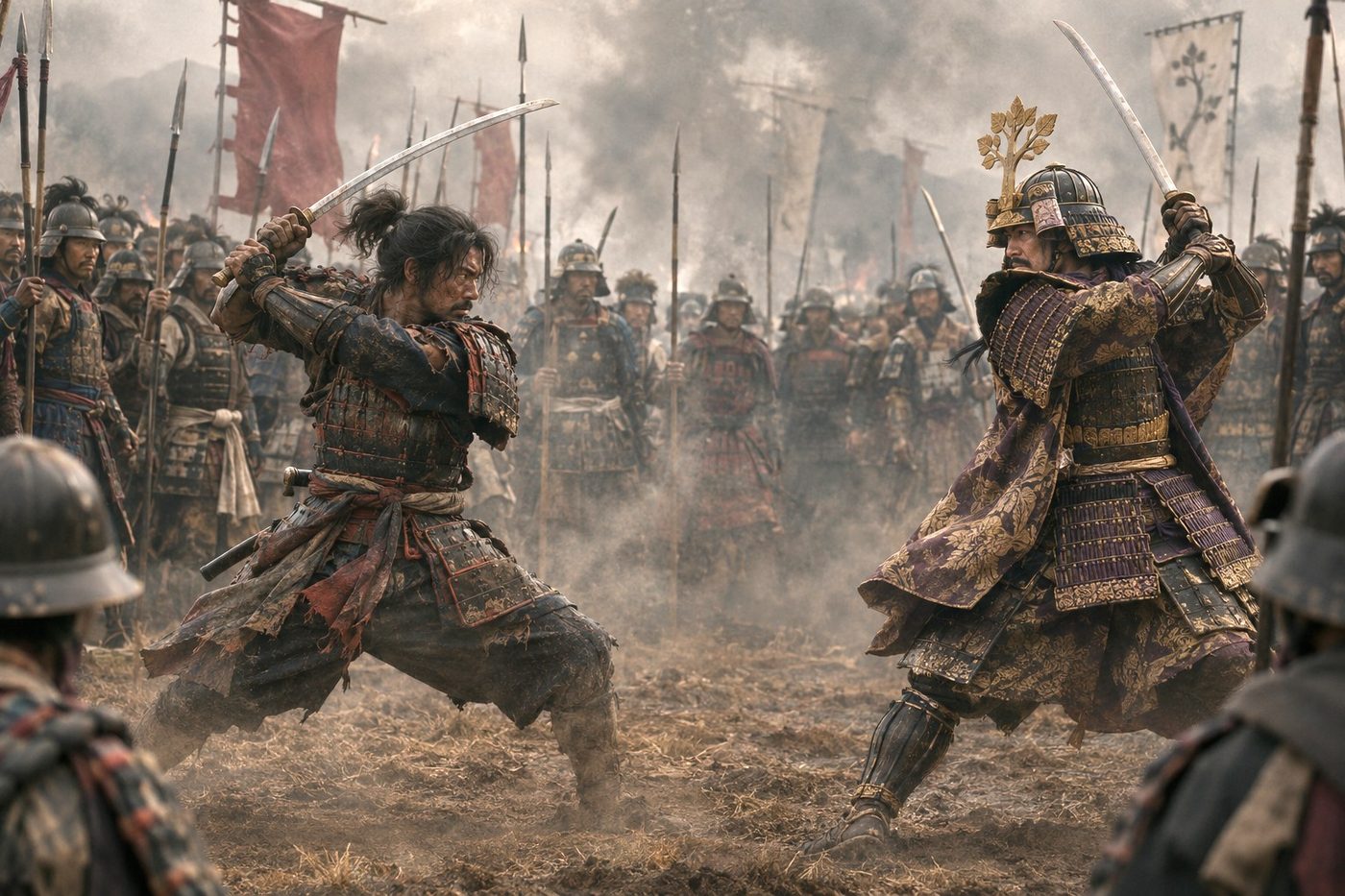
A warrior makes a Support roll with a fitting skill, as the core rules describe (SWADE p. 132), or chooses one of the setting's deeds instead.
Seek a Worthy Foe. The hero cuts through the bodyguards to challenge an enemy captain, a famous warrior, or the enemy's champion. The hero makes a Fighting roll at –2 to reach them.
- On a success, the hero faces the foe: play a short fight, or make one opposed Fighting roll between them. If the hero wins, the enemy commander subtracts 2 from their Battle total this round, and the hero may take the foe's head (Chapter 4, Combat). If the hero loses, they take a Wound.
- On a failure, the hero takes a Wound and doesn't reach the foe.
- On a Critical Failure, the hero takes d4+1 Wounds, as in the core rules.
Rally the Ranks. The hero beats the great drum, blows the conch, raises the lord's standard, or chants a sutra at the front of the line. They roll Persuasion, Intimidation, or Performance. On a success, the army adds +2 to its next Morale roll (+4 on a raise). On a failure, nothing changes, and on a Critical Failure the hero is cut down at the front (one Wound).
Behind the Lines. The hero slips around the enemy's flank to burn the baggage, cut the gunners' match cords, steal the enemy's standard, or spread a rumor that the lord has fled. They roll Stealth or Thievery at –2. On a success, the enemy loses its formation's Advantage this round. On a raise, it also subtracts 1 from its Battle total. On a failure, the hero is spotted and takes a Wound. On a Critical Failure, they are captured (Chapter 4, Surrender and Ransom).
Magic in battle. Prayers for victory, a genja's Support roll, and War Rites over whole companies are in Chapter 6 (Part 4: The Rites of War).
Glory and Pollution#
The war tales. A hero who rolls An Army of One on the Battle Effects table (SWADE p. 132) has done a deed for the war tales: +3 Honor (Chapter 4), as long as someone lives to tell it. Honor from battle follows Chapter 4's limit per adventure: a victory is an ordinary deed, and the war tales are a great one.
The head viewing. After the battle, the lord views the heads taken by his warriors and rewards them as Chapter 4 describes. A hero who won a Seek a Worthy Foe deed counts as having taken the head of a famous enemy.
Pollution. A battle is a bloody fight. Every hero who killed a foe or took a Wound in it moves one step on the kegare track (Chapter 4), once per battle.
Castles#
Every province is guarded by castles, from earthen forts on wooded ridges to great white keeps over castle towns. A castle in the isles is not a single wall but a maze: rings within rings, each with its own gate, and each gate built so that an attacker who breaks it finds himself in a little walled yard with arrows coming from three sides.
Kinds of Castle#
The castle's bonus is a Tactical Advantage for the defenders in every round of a siege battle, on top of the +2 to Morale the core rules give an army in fortifications.
| Castle | What it is | Castle bonus |
|---|---|---|
| Fortified house (yakata) | A lord's house behind an earthen wall, a ditch, and a strong gate | +1 |
| Hill fort (yamashiro) | Ditches, earthworks, and wooden palisades along a wooded ridge, with towers at every turn | +2 |
| Castle (hirayamajiro) | Stone footings, white plastered walls, and gatehouses on a hill above a castle town | +3 |
| Great castle | Towering stone walls, deep moats, and a many-roofed keep (tenshu) at the heart | +4 |
A house's Walls and Gate Upgrade (Part 2) builds its home from fortified house to hill fort to castle. A great castle takes a great lord's wealth, years of work, and usually the Castle Builder Edge.
The Three Rings#
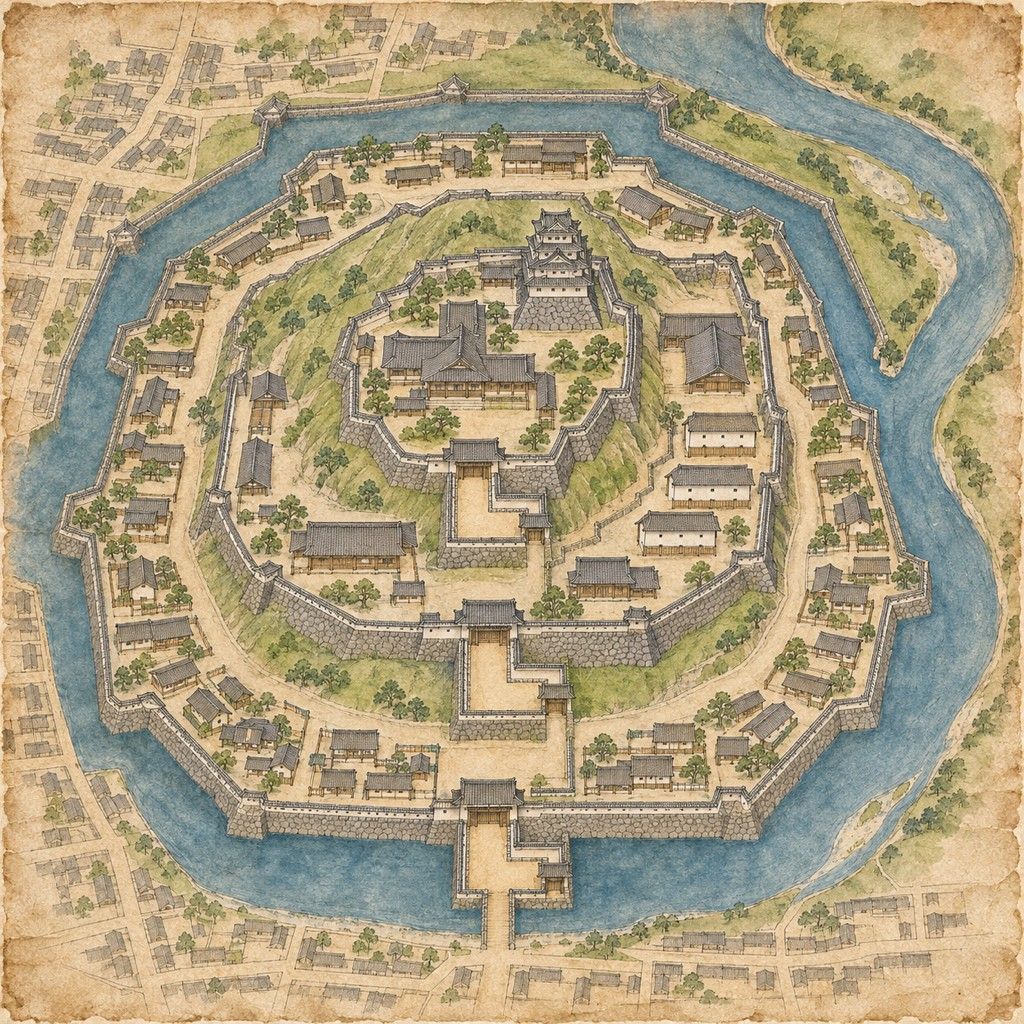
Most castles have three rings, from the outside in: the outer ring (san-no-maru), where the retainers live; the second ring (ni-no-maru), with storehouses and the lord's halls; and the inner ring (honmaru), where the lord lives and the keep stands. A fortified house has only one ring.
An attack on a castle is fought ring by ring:
- Each ring is a mass battle. In the second and inner rings, the defenders add +1 to the castle bonus, for the narrow gates and killing yards (still within the +4 limit).
- Falling back. When the defenders fail a Morale roll in the outer or second ring, they don't leave the field. They fall back to the next ring with the Force Tokens they have left, and the attacker takes the ring. A Critical Failure means the defenders are routed, and the castle falls.
- The last ring. When the defenders fail a Morale roll in the inner ring, the castle falls. The GM may instead play the end as a fight inside the burning keep, where the castle's lord and their last guards make their stand.
Sieges#
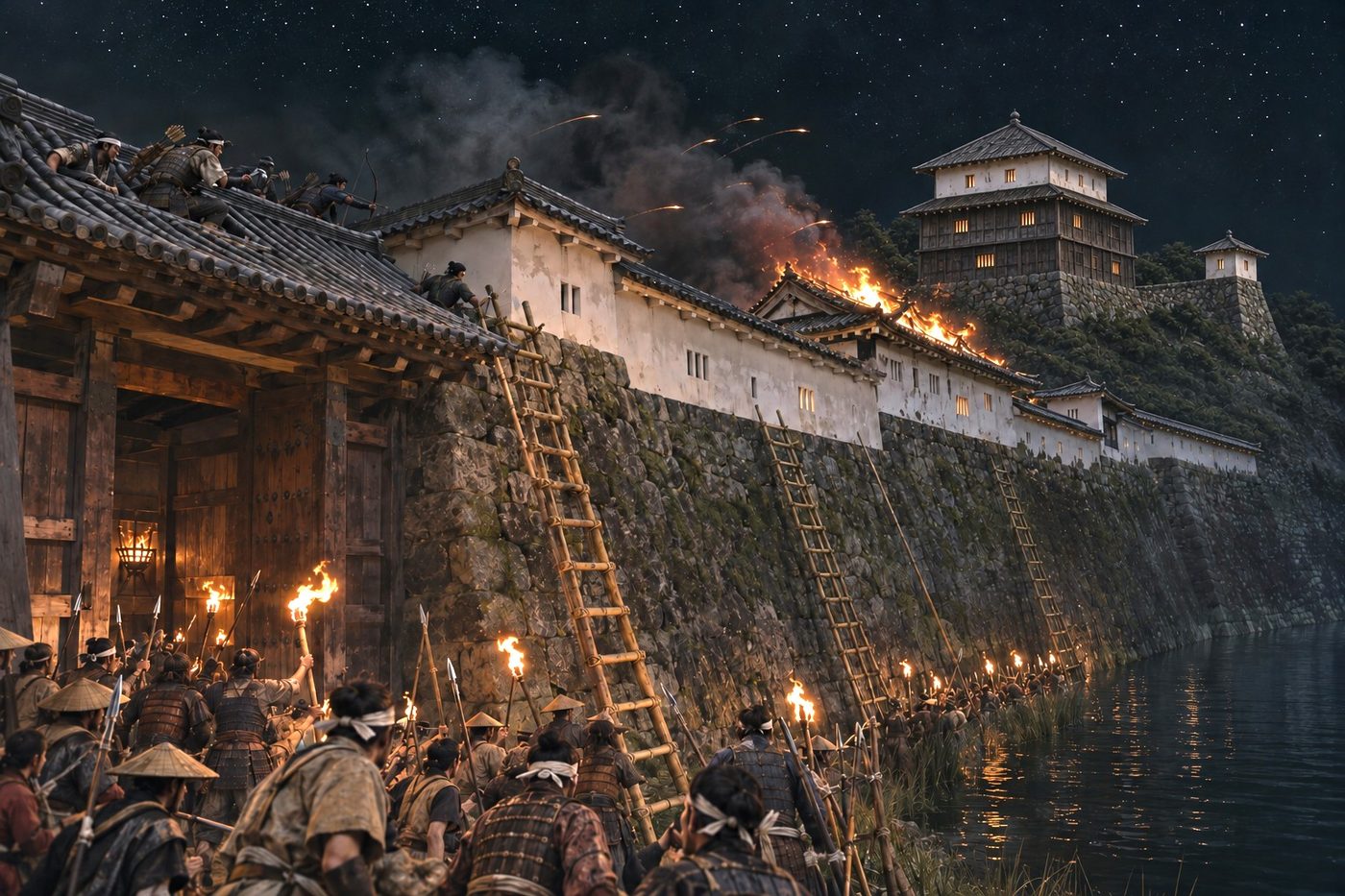
Storming a castle costs lives by the thousand, so a wise general would rather not. A siege is fought in months, not hours, and won by hunger, water, gold, and betrayal as often as by the sword. For a siege on the tabletop, use the Breaches rules (FC p. 70), and treat white plastered walls as wood.
Each month of the siege, the attacking commander chooses one method:
Starve them out (hyōrō-zeme). The besieger rings the castle with forts and waits. At the end of each month, the defending commander makes a Spirit roll at –1 for each month the siege has lasted. On a failure, the defenders lose a Force Token to hunger and desertion. A castle with the Well and Storehouses Upgrade (Part 2), or one that has stocked a year's rice, makes no rolls for the first three months.
Flood them out (mizu-zeme). For a castle on low ground near a river, the besieger builds a dike and turns the river into the castle. This takes a month and a Battle roll at –2 by the commander, or a Repair roll by a hero with the Castle Builder Edge. On a success, the castle's bonus drops by 2 for the rest of the siege, and starvation rolls suffer an extra –2.
Undermine. Miners dig beneath the walls to bring them down. This takes a month and a Repair roll. On a success, the castle bonus drops by 1 for the rest of the siege. On a Critical Failure, the defenders find the tunnel and flood or burn it.
Turn a captain. The heroes reach a captain inside the walls, by letter, by night visit, or through an old debt. Play it as a Social Conflict (SWADE p. 143) with the captain. A Major on held over the captain wins without a roll. On a win, the captain opens a gate: the attacker skips the outer ring, or skips both the outer and second rings on a decisive win. Betrayal is ancient and common in the isles, and a captain who turns is never quite trusted by his new lord.
Burn them out. Fire arrows (Chapter 4, Combat) set roofs, storehouses, and wooden keeps alight. The attacker makes a Shooting roll for their archers; on a success, the defenders lose a Force Token and a store from their domain's treasury. Burning a castle with its people inside is a grave act (see Aftermath).
Storm the walls. The attacker fights the ring-by-ring battle described above, with ladders, grappling hooks, and the courage of the first over the wall.
The besieger's costs. Each month of siege costs the attacking domain one store, and in winter, the besieger also makes the Spirit roll for desertion (without the cumulative penalty).
Engines of War#
The isles have few great engines. Traction catapults, pulled by teams of men, came long ago from Daqian, and a few lords have bought cannon from foreign ships at Umikado. Use the siege engines in the Fantasy Companion (FC p. 59) by their island names: the catapult works as written, and cannon are rare, costly, and feared. A side with working cannon adds +1 to its Tactical Advantage in a siege.
Aftermath#
Surrender. A castle's lord may surrender to save their people, often by offering their own life (Chapter 4, Death and Its Customs). A besieger who accepts and spares the garrison earns 1 Honor. One who breaks the terms loses 4.
Pollution. Storming a castle is a bloody fight (see Glory and Pollution). A castle burned with its people inside becomes Profane Ground (HC p. 41) until a great purification is performed, and its ghosts are a Savage Tale waiting to happen.
Spoils. The victor takes the castle, its storehouses (any stores the defenders had left), and often its lands, if the victor's own lord agrees.
New Edge#
Castle Builder Requirements: Seasoned, Smarts d8, Battle d6, Repair d6 The hero has studied the ground, the stone, and the art of the gate. When they take the Fortify action (Part 3), it costs one store less. When the hero commands the defense of a castle, or the siege works against one, their side adds +1 to its Tactical Advantage (within the +4 limit). With this Edge, the hero can design a great castle for their lord or their own house, given years and a great lord's wealth.
Notes#
- Temple leagues and warrior monks in war draw on F. Brinkley, A History of the Japanese People (1915).